This page is all about the migration and adaptations of the African elephant!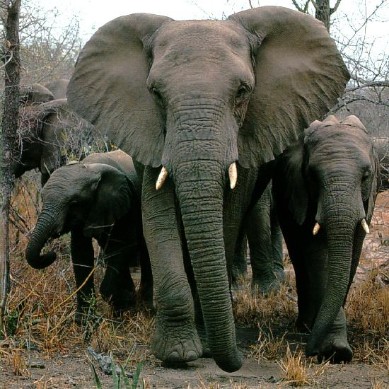 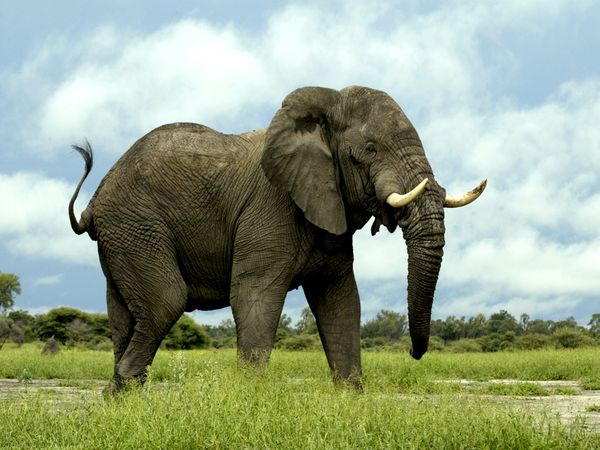 |
Normal Adaptations Most of the skull is honeycombed with sinuses to minimize weight. Tusks are extended and grow throughout the lifetime. They are used as weapons as well as carrying and gathering food. Six connected sets of two upper and two lower molars are produced throughout their lifetime. Their trunks are an extension of the nose and upper lip. The adult’s trunk contains 150,000 muscles. It is used for eating, drinking, dust, water bathing, and communication. Their sense of smell is highly sophisticated; they are believed to locate underground water by smelling the earth above. Their vision is poor. Long lashes and eye lids protect the eyes from dust. Their hearing is sensitive.Their ears are used to help cool their body down and control blood circulation. They are herbivores.
|
Migration Adaptations Their group is led by the oldest female or the matriarch; she guides the group on where to go and what do and is constantly on guard for whenever a threat to the group’s safety is detected. She sees to it that the little ones are kept well fed and safe and that the group remains intact. African elephants are natural travelers. They are in constant search of a land where there is plenty of food. African weather or low rainfall causes plants to not grow quickly enough where it can feed a family of elephants for very long without having to change location. Migration is a new thing for elephants.
|
